[ad_1]  Scottish scientists hope a breakthrough in the understanding of
Read more
[ad_1] Pancreatic ductal adenocarcinoma (PDAC), the most common type of
Read more
[ad_1] By James GallagherHealth and science correspondentAn unprecedented analysis of
Read more
[ad_1] Researchers at The University of Texas MD Anderson cancer
Read more
[ad_1] July 3, 2023 — RefleXion Medical, Inc., a therapeutic oncology
Read more
[ad_1] Tumour growth can be prevented by removing excess chromosomes
Read more

Upcoming Conferences

oncology conference

International Conference on Oncology and Cancer Research

Research Award

Event Places

[ad_1]

oncology.pencis.com/” target=”_blank”> 

oncology.pencis.com/” target=”_blank”>

oncology.pencis.com/” target=”_blank”>

oncology.pencis.com/” target=”_blank”>


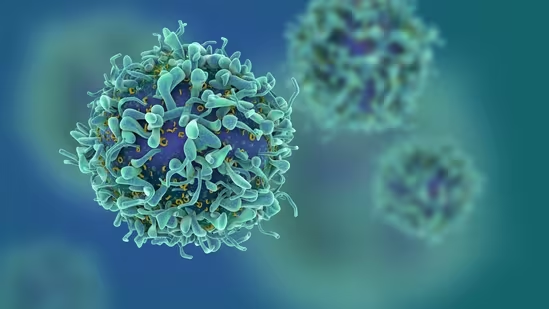
Scottish scientists hope a breakthrough in the understanding of bowel cancer will lead to new treatments.

oncology.pencis.com/” target=”_blank”>Researchers at the University of Glasgow and cancer Research UK’s Beatson Institute have solved a decades-long riddle of why the immune system of patients ignores the disease.

oncology.pencis.com/” target=”_blank”>Until now, it was not known how cancer blinds the immune system to the disease rendering it unable to destroy it.

oncology.pencis.com/” target=”_blank”>Bowel cancer is the second most common cause of cancer death in the UK.

  • oncology.pencis.com/” target=”_blank”>’My bowel cancer was missed because I am young’
  • oncology.pencis.com/” target=”_blank”>New plan aims to cut late-stage cancer diagnosis
  • oncology.pencis.com/” target=”_blank”>Scottish cancer waiting times performance at record low

oncology.pencis.com/” target=”_blank”>Dr Seth Coffelt, who led the Research, said: “Normally, immune cells keep things as they should be, patrolling the bowel like security guards, tackling any harmful bacteria and keeping the gut healthy.

oncology.pencis.com/” target=”_blank”>”However, when cells in the bowel become cancerous, they fire these ‘security guards’ and all the methods these immune cells use to talk to each other to co-ordinate an immune response no longer get produced.

oncology.pencis.com/” target=”_blank”>”cancer doesn’t want immune cells recognising them as a threat, so they manipulate the immune cells so they can’t see the threat and simply pass on by leaving the cancer to do its damage.”

oncology.pencis.com/” target=”_blank”>Scientists have said the discovery, published in cancer Immunology Research, a journal of the American Association for cancer Research, opens the door to potentially reversing or preventing this process.

oncology.pencis.com/” target=”_blank”>It would allow the immune system to see the bowel cancer cells and stop them from growing and multiplying.

oncology.pencis.com/” target=”_blank”>’Attacking threats’

oncology.pencis.com/” target=”_blank”>Bowel cancer is the second most common cause of cancer death in the UK, with about 16,800 deaths in the country every year – or 46 every day.

oncology.pencis.com/” target=”_blank”>In Scotland, about 4,000 people are diagnosed with the disease every year.

oncology.pencis.com/” target=”_blank”>As part of the work, the Glasgow-based researchers focused on a particular type of immune cell called gamma delta T cells.

oncology.pencis.com/” target=”_blank”>Bowel cancer begins in the epithelial cells which line the bowel and these T cells patrol this area attacking any threats, such as damaged cells or small tumours, before they cause harm.

oncology.pencis.com/” target=”_blank”>Scientists already knew that when bowel cancer is present, immune cells that can kill cancer do not often act against the bowel cancer, but they did not know why.

oncology.pencis.com/” target=”_blank”>Using tissue samples from bowel cancer tumours donated by patients in Scotland, and other countries, scientists were able to identify the specific mechanism the cancer cells use to rewire the gamma delta T cells on a molecular level.

oncology.pencis.com/” target=”_blank”>The team that made the discovery is now hopeful further Research could offer treatments which could reverse that process.

oncology.pencis.com/” target=”_blank”>Discovering how the cancer cells trick the immune system offers potential for new treatments which could reactivate these immune cells, researchers said.

oncology.pencis.com/” target=”_blank”>Dr Coffelt said: “Our discovery means that if a way can be found to artificially engage the ‘blinded’ T cells with a drug so that the T cells can see the cancer again, we could find a new effective way to treat bowel cancer.”

oncology.pencis.com/” target=”_blank”>The Research won funding from the Medical Research Council and the Wellcome Trust.

oncology.pencis.com/” target=”_blank”>Related Topics

[ad_2]

cancer-breakthrough-after-immune.html”>Source link

[ad_1]

oncology.pencis.com/” target=”_blank”>

oncology.pencis.com/” target=”_blank”>

oncology.pencis.com/” target=”_blank”>

oncology.pencis.com/” target=”_blank”>Pancreatic ductal adenocarcinoma (PDAC), the most common type of pancreatic cancer, is one of the deadliest cancer types. Despite modern therapies, only about 12% of people diagnosed with this cancer will be alive five years after treatment.

oncology.pencis.com/” target=”_blank”>Immunotherapies—drugs that help the body’s immune system attack tumors—have revolutionized the treatment of many tumor types. But to date, they have proven ineffective in PDAC. Whether pancreatic cancer cells produce neoantigens—proteins that can be effectively targeted by the immune system—hasn’t been clear.

oncology.pencis.com/” target=”_blank”>An NIH-funded Research team led by Dr. Vinod Balachandran from Memorial Sloan Kettering cancer Center (MSKCC) have been developing a personalized mRNA cancer-treatment vaccine approach. It is designed to help immune cells recognize specific neoantigens on patients’ pancreatic cancer cells. Results from a small clinical trial of their experimental treatment were published on May 10, 2023, in Nature.

oncology.pencis.com/” target=”_blank”>After surgery to remove PDAC, the team sent tumor samples from 19 people to partners at BioNTech, the company that produced one of the COVID-19 mRNA vaccines. BioNTech performed gene sequencing on the tumors to find proteins that might trigger an immune response. They then used that information to create a personalized mRNA vaccine for each patient. Each vaccine targeted up to 20 neoantigens.

oncology.pencis.com/” target=”_blank”>Customized vaccines were successfully created for 18 of the 19 study participants. The process, from surgery to delivery of the first dose of the vaccine, took an average of about nine weeks.

oncology.pencis.com/” target=”_blank”>All patients received a drug called atezolizumab before vaccination. This drug, called an immune checkpoint inhibitor, prevents cancer cells from suppressing the immune system. The vaccine was then given in nine doses over several months. After the first eight doses, study participants also started standard Award-call-for-profile/”>Chemotherapy drugs for PDAC, followed by a ninth booster dose.

oncology.pencis.com/” target=”_blank”>Sixteen volunteers stayed healthy enough to receive at least some of the vaccine doses. In half these patients, the vaccines activated powerful immune cells, called T cells, that could recognize the pancreatic cancer specific to the patient. To track the T cells made after vaccination, the Research team developed a novel computational strategy with the lab of Dr. Benjamin Greenbaum at MSKCC. Their analysis showed that T cells that recognized the neoantigens were not found in the Blood before vaccination. Among the eight patients with strong immune responses, half had T cells target more than one vaccine neoantigen.

oncology.pencis.com/” target=”_blank”>By a year and a half after treatment, the cancer had not returned in any of the people who had a strong T cell response to the vaccine. In contrast, among those whose immune systems didn’t respond to the vaccine, the cancer recurred within an average of just over a year. In one patient with a strong response, T cells produced by the vaccine even appeared to eliminate a small tumor that had spread to the liver. These results suggest that the T cells activated by the vaccines kept the pancreatic cancers in check.

oncology.pencis.com/” target=”_blank”>“It’s exciting to see that a personalized vaccine could enlist the immune system to fight pancreatic cancer—which urgently needs better treatments,” Balachandran says. “It’s also motivating as we may be able to use such personalized vaccines to treat other deadly cancers.”

oncology.pencis.com/” target=”_blank”>More work is needed to understand why half the people did not have a strong immune response to their personalized vaccines. The researchers are currently planning to launch a larger clinical trial of the vaccine.

oncology.pencis.com/” target=”_blank”>—by Sharon Reynolds

[ad_2]

Source link

[ad_1]

By James Gallagher
Health and science correspondent

An unprecedented analysis of how cancers grow has revealed an “almost infinite” ability of tumours to evolve and survive, say scientists.

The results of tracking lung cancers for nine years left the Research team “surprised” and “in awe” at the formidable force they were up against.

They have concluded we need more focus on prevention, with a “universal” cure unlikely any time soon.

cancer Research UK said early detection of cancer was vitally important.

The study – entitled TracerX – provides the most in-depth analysis of how cancers evolve and what causes them to spread.

Cancers change and evolve over time – they are not fixed and immutable. They can become more aggressive: better at evading the immune system and able to spread around the body.

A tumour starts as a single, corrupted cell, but becomes a mixture of millions of cells that have all mutated in slightly different ways.

TracerX tracked that diversity and how it changes over time inside lung cancer patients and say the results would apply across different types of cancer.

“That has never been done before at this scale,” said Prof Charles Swanton, from the Francis Crick Institute and University College London.

More than 400 people – treated at 13 hospitals in the UK – had biopsies taken from different parts of their lung cancer as the disease progressed.

“It has surprised me how adaptable tumours can be,” Prof Swanton told me.

“I don’t want to sound too depressing about this, but I think – given the almost infinite possibilities in which a tumour can evolve, and the very large number of cells in a late-stage tumour, which could be several hundred billion cells – then achieving cures in all patients with late-stage disease is a formidable task.”

News/976/cpsprodpb/BB98/production/_129342084_eded577c-8ca5-4127-b3ab-6284941a6469.jpg” width=”320″/>

[ad_2]

Source link

[ad_1]

oncology.pencis.com/” target=”_blank”>

oncology.pencis.com/” target=”_blank”>

oncology.pencis.com/” target=”_blank”>

oncology.pencis.com/” target=”_blank”>

oncology.pencis.com/” target=”_blank”>
Researchers at The University of Texas MD Anderson cancer Center have discovered that certain nano-based cancer therapies may be less effective in younger patients, highlighting the need for further investigation into the impact of aging on the body’s ability to respond to treatment.

oncology.pencis.com/” target=”_blank”>The researchers found age-related differences are due to how effectively the liver filters the bloodstream. Younger livers are more efficient at this process, which helps limit toxins in the Blood but also filters out beneficial treatments, potentially rendering them ineffective.

oncology.pencis.com/” target=”_blank”>The study, published today in Nature Nanotechnology, was led by Wen Jiang, M.D., Ph.D., associate professor of Radiation oncology, and Betty Kim, M.D., Ph.D., professor of Neurosurgery.

oncology.pencis.com/” target=”_blank”>Put simply, our liver is designed to protect us, but for young people it might also be protecting them in a way that limits the effectiveness of nanotherapies. There’s so much interest right now in nano-scale delivery systems and designs, but nobody has really considered how age plays a role in the effectiveness of these systems. In preclinical models, younger livers actually work so well that they filter out a significant amount of the nanomedicine. That means, in some cases, these drugs may be less effective in younger patients than in older ones.”

oncology.pencis.com/” target=”_blank”>Wen Jiang, M.D., Ph.D., Associate Professor of Radiation oncology, Professor of Neurosurgery, University of Texas M. D. Anderson cancer Center

oncology.pencis.com/” target=”_blank”>Unlike traditional cancer therapies, in which medicine is directly introduced to the body, nanomedicines use nano-scale carriers to deliver treatments. Some of the advantages of nanomedicine formulations can include reduced toxicity, increased target specificity and increased dosage, depending on the goal of the treatment.

oncology.pencis.com/” target=”_blank”>To date, more than 50 nano-based therapies have been approved by the Food and Drug Administration, including 19 currently listed by the National cancer Institute for use in cancer. The study treatment was Nanoparticle-albumin-bound paclitaxel, which has been used since 2005 for certain refractory or relapsed cancers.

oncology.pencis.com/” target=”_blank”>Scientists do not fully understand all the mechanisms for how, exactly, the liver filters the bloodstream, but previous studies have indicated a correlation between the rate of clearance and the expression of the scavenger receptor MARCO. This protein is expressed more in younger Kupfer cells, the immune cells that reside in the liver.

oncology.pencis.com/” target=”_blank”>After confirming the disparity in results between young and old models, the team investigated therapeutic blockade of MARCO as a possible strategy to avoid drug clearance. Blocking MARCO reduced the uptake of the nanomedicine and improved the drug’s antitumor effects from the cancer therapeutics, but only in the younger models.

oncology.pencis.com/” target=”_blank”>”This is just one example, but these results show that there may not always be a one-size-fits-all Conference-terms-conditions/”>Drug Delivery strategy that is effective across diverse patient populations, and that personalized design is warranted in future nanomedicines,” Jiang said. “Hopefully, this study also opens the door for more thorough investigation of the clearance process and how to overcome it.”

oncology.pencis.com/” target=”_blank”>Jiang emphasized that while this study focuses on cancer, it examines a potential hurdle for any nanodrug delivery system. There are different proteins, antibodies and viruses with unique clearance mechanisms, but it all comes down to the liver, he explained.

oncology.pencis.com/” target=”_blank”>Source:

oncology.pencis.com/” target=”_blank”>University of Texas M. D. Anderson cancer Center

oncology.pencis.com/” target=”_blank”>Journal reference:

oncology.pencis.com/” target=”_blank”>Wang, Y., et al. (2023) Age-associated disparity in phagocytic clearance affects the efficacy of cancer nanotherapeutics. Nature Nanotechnologydoi.org/10.1038/s41565-023-01502-3.

[ad_2]

cancer-therapies-may-be-less.html”>Source link

[ad_1]

oncology.pencis.com/” target=”_blank”>

oncology.pencis.com/” target=”_blank”>

oncology.pencis.com/” target=”_blank”>July 3, 2023 — RefleXion Medical, Inc., a therapeutic oncology company, today announced that results of a prospective investigator-initiated clinical imaging study conducted on its X1 platform by City of Hope using positron emission tomography (PET) were presented on June 24 during an oral session at the Society of Nuclear Medicine and Medical Imaging (SNMMI) annual meeting in Chicago. The study results serve as the foundation for evaluating the use of RefleXion’s SCINTIX biology-guided radiotherapy with a prostate-specific PET radiotracer for controlling external-beam radiotherapy delivery to prostate cancer tumor targets. City of Hope, one of the largest cancer Research and treatment organizations in the U.S., is among the first in the nation to adopt this new radiotherapy technology that has the potential to change the way metastatic cancer patients are treated. 

oncology.pencis.com/” target=”_blank”>Recently cleared by the U.S. Food and Drug Administration (FDA), SCINTIX technology is the first and only cancer therapy that uses each cancer’s unique biology to autonomously determine where to deliver radiotherapy, second-by-second, during the actual cancer treatment to indicated solid tumors of any stage. SCINTIX therapy uses signals produced by a PET radiotracer interacting with cancer cells to control delivery of external-beam radiotherapy to tumor targets. 

oncology.pencis.com/” target=”_blank”>The prostate-specific PET radiotracer used in the presented study – 18F-DCFPyL (PyL) – binds to prostate-specific membrane antigen (PSMA), a protein that is expressed in significantly elevated amounts by prostate cancer cells. Also recently approved by the FDA for diagnosing and staging prostate cancer, PyL can accurately and precisely pinpoint tumors in both the prostate and in other body areas where the cancer may have spread or metastasized. 

oncology.pencis.com/” target=”_blank”>“It is well established that PyL exquisitely detects tumors present in patients with prostate cancer, but targeting and treating those tumors can be challenging using existing radiotherapy approaches,” said Jeffrey Wong, M.D., professor of the Department of Radiation oncology and the Department of Immunology and Theranostics at City of Hope, and principal investigator of the RefleXion-supported PyL imaging study. “SCINTIX therapy could overcome these barriers, and our study results support continued exploration of leveraging PyL’s precision to expand SCINTIX therapy to patients with prostate cancer.” 

oncology.pencis.com/” target=”_blank”>The prospective PyL imaging study established that tumors arising from prostate cancer could be visualized on the RefleXion X1 platform using signals from PyL consistent with PyL diagnostic imaging studies, and that SCINTIX treatment plans could be generated using these data. PSMA-directed SCINTIX treatment plans also met conventional radiotherapy organ dose constraints, suggesting the ability to spare nearby organs and other healthy tissue from potentially damaging radiation. SCINTIX therapy is currently cleared for use with 18F fludeoxyglucose (FDG), a common PET radiotracer, to treat primary and metastatic tumors in the lung and bone. 

oncology.pencis.com/” target=”_blank”>“We look forward to offering FDG-directed SCINTIX therapy to our patients in the next several weeks,” said Terence Williams, M.D., Ph.D., professor and chair of City of Hope’s Department of Radiation oncology. “As early collaborators in evaluating SCINTIX technology, it is gratifying to see Research and clinical development efforts already advancing it toward another patient population in great need of improved radiotherapy approaches using the well-characterized benefits of PyL.” 

oncology.pencis.com/” target=”_blank”>For more information:https://oncology.pencis.com/

[ad_2]

Source link

[ad_1]

Tumour growth can be prevented by removing excess chromosomes from cancer cells: Study(Shutterstock)

According to a recent Yale study, cancer cells with additional chromosomes rely on those chromosomes for tumour formation, and removing them stops the cells from growing tumours. The results, according to the researchers, point to the possibility of a novel cancer treatment strategy that specifically targets additional chromosomes. The study was published in the journal Science.

Human cells typically have 23 pairs of chromosomes; extra chromosomes are an anomaly known as aneuploidy.

“If you look at normal skin or normal lung tissue, for example, 99.9% of the cells will have the right number of chromosomes,” said Jason Sheltzer, assistant professor of surgery at Yale School of Medicine and senior author of the study, adding, “But we’ve known for over 100 years that nearly all cancers are aneuploid.”

ALSO READ: cancer can occur at any time or age; symptoms and warning signs to look out for

However, it was unclear what role extra chromosomes played in cancer for instance, whether they cause cancer or are caused by it.

“For a long time, we could observe aneuploidy but not manipulate it. We just didn’t have the right tools,” said Sheltzer, who is also a researcher at Yale cancer Center, adding, “But in this study, we used the gene-engineering technique CRISPR to develop a new approach to eliminate entire chromosomes from cancer cells, which is an important technical advance. Being able to manipulate aneuploid chromosomes in this way will lead to a greater understanding of how they function.”

The study was co-led by former lab members Vishruth Girish, now an M.D.-Ph.D. student at Johns Hopkins School of Medicine, and Asad Lakhani, now a postdoctoral researcher at Cold Spring Harbor Laboratory.

Using their newly developed approach which they dubbed Restoring Disomy in Aneuploid cells using CRISPR Targeting, or ReDACT the researchers targeted aneuploidy in melanoma, gastric cancer, and ovarian cell lines. Specifically, they removed an aberrant third copy of the long portion also known as the “q arm” of chromosome 1, which is found in several types of cancer, is linked to disease progression, and occurs early in cancer development.

“When we eliminated aneuploidy from the genomes of these cancer cells, it compromised the malignant potential of those cells and they lost their ability to form tumors,” said Sheltzer

Based on this finding, the researchers proposed cancer cells may have an “aneuploidy addiction” — a name referencing earlier Research that discovered that eliminating oncogenes, which can turn a cell into a cancer cell, disrupts cancers’ tumor-forming abilities. This finding led to a model of cancer growth called “oncogene addiction.”

When investigating how an extra copy of chromosome 1q might promote cancer, the researchers found that multiple genes stimulated cancer cell growth when they were overrepresented — because they were encoded on three chromosomes instead of the typical two.

This overexpression of certain genes also pointed the researchers to a vulnerability that might be exploited to target cancers with aneuploidy.

Previous Research has shown that a gene encoded on chromosome 1, known as UCK2, is required to activate certain drugs. In the new study, Sheltzer and his colleagues found that cells with an extra copy of chromosome 1 were more sensitive to those drugs than were cells with just two copies, because of the overexpression of UCK2.

Further, they observed that this sensitivity meant that the drugs could redirect cellular evolution away from aneuploidy, allowing for a cell population with normal chromosome numbers and, therefore, less potential to become cancerous. When researchers created a mixture with 20 per cent aneuploid cells and 80% normal cells, aneuploid cells took over: after nine days, they made up 75 per cent of the mixture. But when the researchers exposed the 20 per cent aneuploid mixture to one of the UCK2-dependent drugs, the aneuploid cells comprised just 4% of the mix nine days later.

“This told us that aneuploidy can potentially function as a therapeutic target for cancer,” said Sheltzer, adding, “Almost all cancers are aneuploid, so if you have some way of selectively targeting those aneuploid cells, that could, theoretically, be a good way to target cancer while having minimal effect on normal, non-cancerous tissue.”

More Research needs to be done before this approach can be tested in a clinical trial. But Sheltzer aims to move this work into animal models, evaluate additional drugs and other aneuploidies, and team up with pharmaceutical companies to advance toward clinical trials.

“We’re very interested in clinical translation,” said Sheltzer, adding, “So we’re thinking about how to expand our discoveries in a therapeutic direction.”

This story has been published from a wire agency feed without modifications to the text. Only the headline has been changed.

[ad_2]

Source link